
Applied GC and GC-MS maintenance

- Duration: 3 hours for on-demand
- Experience level: Intermediate
- Delivery methods: Offsite training & consultancy | On-Demand | Online | Onsite training & consultancy | Tailored training |
- Type of course: Universal
- Applicable to manufacturer(s): Agilent | Bruker | CDS Analytical | CTC analytics | Frontier | GERSTEL | GL Sciences | Leco | OI Analytical | PerkinElmer | Scion | Shimadzu | SRI | Thermo | Varian | Waters |
- CPD Approved: Approved
- Scheduled course price: £195.00 + TAX per delegate
- Course discounts: RSC CAMS HEaTED Cambridge Network members receive a discount on this course
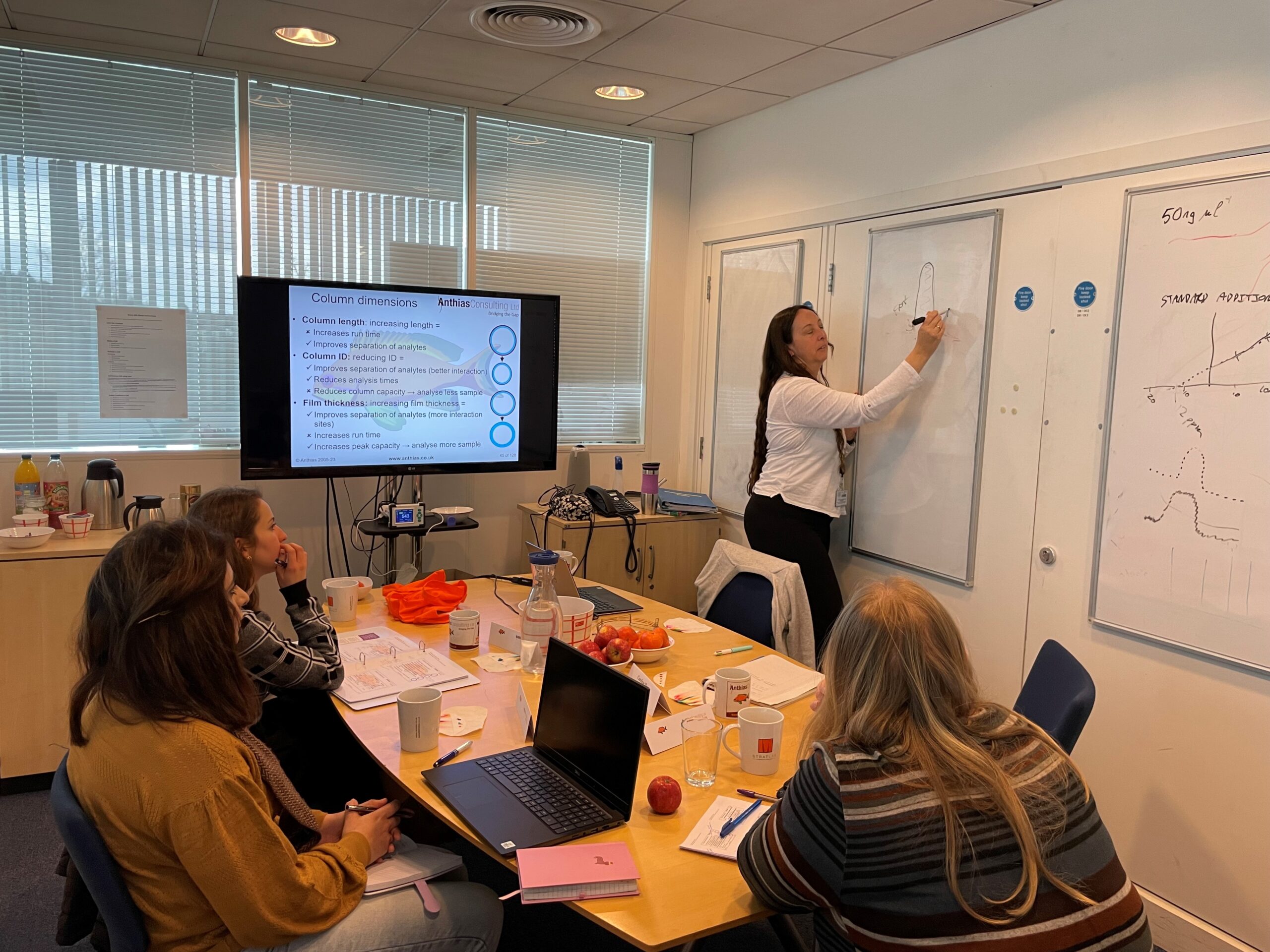
Your applied guide to maintaining gas chromatography (GC) and GC-mass spectrometry (GC-MS) instrumentation
Module 11 of the Complete GC and GC-MS and module 3 of The GC and GC-MS Clinic course
Applied GC and GC-MS maintenance module is approved by the Royal Society of Chemistry (RSC) for the purposes of Continuing Professional Development (CPD). Designed for professionals, students and chemists, providing an overview of the maintenance of GC and GC-MS systems, covering gases, autosamplers, sample introduction devices, inlets, columns, detectors, mass spectrometers, vacuum systems, and data systems. This module will provide you with the practical theory for maintenance procedures, preventative maintenance strategies, and troubleshooting approaches to help maximise instrument uptime, data quality, sensitivity, and reliability in your laboratory.
This module can be combined with any of the other twelve modules in the Complete GC and GC-MS to tailor your training needs.
Why should I join?
On completion of this training, you will develop the skills needed to maintain instruments in optimum operating condition and minimise costly downtime, giving you:
- An overview of preventative maintenance strategies for GC and GC-MS systems
- Understanding of how contamination, leaks, poor gas quality, and consumable wear affect analytical performance
- Insight into maintenance requirements for autosamplers, inlets, columns, detectors, and mass spectrometers
- Routine maintenance schedules and best practices used in analytical laboratories
- Guidance on maintaining system sensitivity, stability, and reproducibility
- A detailed understanding of leak checking, tuning, vacuum system maintenance, and ion source cleaning
- A valuable refresher for analysts responsible for routine operation, troubleshooting, or instrument care
What would I learn?
This module focuses on the maintenance supporting reliable GC and GC-MS analysis, you will learn:
- The critical components of a GC and GC-MS system and how they interact to produce analytical results
- How to maintain gas cylinders, regulators, gas lines, traps, and filters to ensure high-purity gas delivery
- The maintenance requirements of liquid autosamplers, thermal desorption systems, pyrolysers, headspace samplers, and purge-and-trap systems
- How to reduce carryover and maintain sampling devices for consistent performance
- The maintenance and replacement of inlet consumables including septa, liners, liner seals, ferrules, and split vent traps
- How to clean, install, trim, condition, and regenerate capillary columns
- The principles of detector maintenance for FID and ECD systems, including contamination control and detector care
- The maintenance requirements of vacuum pumps, ion sources, filaments, mass analysers, and electron multipliers
What knowledge will I gain?
By the end of the module , you will:
- Understand how preventative maintenance reduces instrument downtime and improves data quality
- Be able to identify common causes of sensitivity loss, contamination, baseline instability, and poor reproducibility
- Understand the importance of gas purity and the role of traps, filters, regulators, and leak-free plumbing
- Know how to determine when consumables such as septa, liners, ferrules, traps, and filters should be replaced
- Be able to correctly install, trim, condition, and regenerate capillary columns
- Understand the indicators that suggest ion source cleaning, filament replacement, or other MS maintenance is required
- Learn how to monitor vacuum system health and maintain roughing pumps and high-vacuum pumps
- Understand how tuning and air/water checks can be used to assess instrument performance and identify issues
Is this course for me?
This course is designed for anyone who would like an in-depth view of maintenance for both techniques.
- Laboratory analysts & technicians using GC and GC-MS
- Laboratory or line managers overseeing GC and GC-MS instruments and analysis
- Data analysts and report writers who work with GC and GC-MS
- Service engineers who want chemistry focused introduction to GC and GC-MS
- Sales, commercial or marketing teams who work with GC and GC-MS components, instruments, or services in anyway and would like more in-depth knowledge
If GC and GC-MS touches your work in any way, this well-planned course delivered by experts in the field equips you to understand the science behind these techniques.


