
Hands-on Thermal Desorption

- Duration: 1 day for live courses
- Experience level: Advanced
- Delivery methods: Face-to-face | Offsite training & consultancy | Onsite training & consultancy | Tailored training |
- Type of course: Universal
- Applicable to manufacturer(s): Agilent | Bruker | GERSTEL | GL Sciences | Leco | PerkinElmer | Sciex | Scion | Shimadzu | SRI | Thermo | Varian | Waters |
- CPD Approved: Approved
- Scheduled course price: £650.00 + TAX per delegate
- Course discounts: RSC CAMS HEaTED Cambridge Network members receive a discount on this course
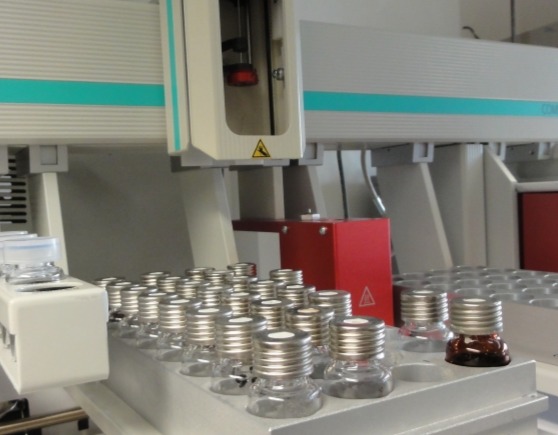
Your Hands-on approach to learning thermal desorption
Module 6 of the Hands-on of Sample Preparation course.
Combine the practical theory of thermal desorption with laboratory-based exercises when attending this Hands-on training approved by the Royal Society of Chemistry (RSC) for purposes of Continuing Professional Development (CPD). Apply the knowledge learnt to practical exercises involving sampling, sorbent selection, method development, optimisation, instrument setup, maintenance, and troubleshooting. Gain experience of thermal desorption workflows, adsorption tubes, sorbent materials, sampling devices, instrumentation, and analytical techniques used to extract, concentrate, and analyse volatile and semi-volatile compounds. This course provides a practical introduction to one of the most sensitive solvent-free sample preparation techniques used in analytical chemistry.
This Hands-on Thermal Desorption course is designed for analysts, scientists, technicians, and laboratory professionals who would like to develop both a practical and theoretical understanding of thermal desorption techniques. The course combines sampling theory, sorbent selection, optimisation, troubleshooting, and real-world applications with laboratory-based exercises that reinforce learning and builds confidence.
Why should I join?
On completion of this Hands-on thermal desorption training, you will have both a strong theoretical understanding and practical experience of developing, performing, optimising, and troubleshooting thermal desorption methods.
This Hands-on thermal desorption course gives you:
- A clear understanding of the principles behind thermal desorption and solvent-free sample preparation
- Practical experience of designing and performing thermal desorption procedures.
- Insight into sorbent selection and analyte-sorbent interactions
- Practical guidance on method optimisation including sampling conditions, desorption temperatures, gas flows, splits, and cold trapping
- Hands-on experience with passive, active, breath, online, and headspace sampling techniques
- Exposure to a wide range of sorbents including Tenax, Carbotrap, Carboxen, Carbosieve, quartz wool, and multi-bed configurations
- Practical troubleshooting techniques for solving common thermal desorption problems
What would I learn?
This course focuses on providing an in-depth understanding of thermal desorption combined with practical hands-on experience. You will learn:
- The differences between direct thermal extraction, adsorption tube analysis, headspace analysis, and related thermal techniques
- How volatile and semi-volatile compounds are collected, concentrated, and delivered to analytical instruments
- The principles of passive, active, diffusive, breath, canister, bag, and online sampling methodologies
- How to select suitable sorbents for different analytes and applications
- Practical approaches to method development and optimisation
- How desorption temperature, desorption time, gas flow, split ratios, and trap conditions influence analytical performance
- The operation of adsorption tubes, cold traps, thermal desorption units, and automated TD systems
- The principles of breakthrough testing, recovery studies, and quantitative analysis
- Water management strategies including dry purging, hydrophobic sorbents, Nafion dryers, and water abstraction systems
- Sample conditioning, calibration, recollection, and automated sample handling procedures
What knowledge will I gain?
By the end of the course, you will:
- Understand the fundamental principles behind thermal desorption and thermal extraction science
- Be able to explain how analytes are adsorbed, concentrated, transported, and desorbed for analysis
- Understand how sorbent selection influences analyte recovery, retention, and analytical sensitivity
- Know how temperature, gas flow, sample volume, humidity, and desorption conditions affect analytical performance
- Understand the principles of passive, active, online, and breath sampling techniques
- Gain confidence in designing and optimising thermal desorption methods for different analytes and sample matrices
- Understand the operation and application of modern thermal desorption instrumentation
- Be able to identify and troubleshoot common issues including breakthrough, carryover, contamination, water interference, poor recovery, leaks, and cold trap performance problems
Is this course for me?
This RSC-approved, for purposes of CPD, Hands-on thermal desorption course is designed for anyone who wants a practical understanding of thermal desorption as a sample preparation and sampling technique.
- Laboratory analysts and technicians performing trace-level volatile and semi-volatile analysis
- Scientists developing analytical methods involving GC and GC-MS
- Laboratory managers overseeing air monitoring, materials testing, and analytical workflows
- Data analysts and report writers seeking a better understanding of how sampling and sample preparation influence analytical results
- Service engineers supporting thermal desorption, chromatography, and related laboratory instrumentation
- Sales, marketing, and commercial professionals working with analytical instrumentation, automation systems, consumables, or laboratory services
- Researchers and scientists looking to strengthen their understanding of sampling science and laboratory best practice
If thermal desorption touches your work in any way, this well-planned course delivered by experts in the field equips you to understand the science behind these techniques.
Course combinations
Can’t attend the full course? No worries, combine days or modules to create training that works best for you. The more days you book the larger the discount.
- For 2 days, pay £1250
- For 3 days, pay £1825
- For 4 days, pay £2350
- For 5 days, pay £2850
Please note, discounts won’t apply when booking but will appear on your invoice.
Select the courses you are interested in:
Feedback from previous attendees
“I enjoyed the 1 to 1 aspect and opportunity to go through questions which related directly to our needs. The course was well organised and comprehensive compared to others.” Lead R+D Chemist, 2025
“This course gave me a good overview of what goes into analyzing with thermal desorption alone and helped to formulate some ideas of how it can be implemented in our laboratory. This course moved at a steady pace, was perfect for a novice. There wasn’t anything I was not able to understand and possibly use in the future.” Feedback from the Practical Essentials of Thermal Desorption Short Course at Pittcon 2019 (Hands-on Thermal Desorption course but without the practicals).
“Very thorough. Slides are excellent. Good pace.” Feedback from the Practical Essentials of Thermal Desorption Short Course at Pittcon 2019 (Hands-on Thermal Desorption course but without the practicals).
“Overall this course was an addition to my initial 5-day course but the extra knowledge & info was great to learn about and gain more understanding into.” Jasmin Hunt, Materials Quality Controller, Clean Tech (September 2018).
“Very detailed principles of TD.” Sharon Mui Lim, Research Technician, The University of Nottingham (April 2017).
“Very detailed information and useful to receive in a handbook for future reference.” Sophie Lester, PhD student, The University of Nottingham (April 2017).
“(I enjoyed) both theory and practical.” Sanjay Kumar Patel, Senior Scientist, RSSL (April 2017).
“Gave good depth of knowledge, applicable for all levels of TD users and their applications.” Ayesha Naeem, Laboratory Technician, Interteck (March 2017).
“There was a lot of useful content and the advantage of a small group. [I enjoyed] the practical examples that allowed us to take part.” Sarah Dunn, Laboratory Technician, Intertek (March 2017).
“I thought the whole day was interesting. It is the first time I’m on a TD course. Both lecturers and practical was useful and instructive. The courses I have attended before it has often been 10-15 people. On this course there were the opportunities to ask questions since we were only 4 people, I think that was very good.” Kari Olsen, Senior Engineer, Norwegian University of Life Sciences (March 2017).
“Clear explanation of every TD Aspect. Very useful tips and tricks.” Ward D’Autry, Scientist, DSM Resolve (bespoke Hands-on Thermal Desorption training, February 2016).
“Enthusiasm and knowledge of the presenter (Diane). Was a great course.” Roy Akkermans, R&D Technican, DSM Resolve (bespoke Hands-on Thermal Desorption training, February 2016).
“(I enjoyed) the freedom to ask specific questions and make sure that the course answered all problems/questions.” Lydia Philippen, Assistant Scientist, DSM Resolve (bespoke Hands-on Thermal Desorption training, February 2016).
“Good knowledge and interactive of Diane.” Erik Ritzen, Assistant Scientist – Chromatography and MS, DSM Resolve (bespoke Hands-on Thermal Desorption training, February 2016).
“Very good. Slides/knowledge of presenter very good. (I enjoyed the) hands-on samples – getting to see result of real analysis.” Chemist, workplace health consultancy (November 2014).
“I enjoyed the hands-on experience gained.” Tracy Warr, Laboratory technician at Satra Technology Centre.
“I enjoyed the knowledge of the presenter and the ability to actually see the instrument work.” Research technician at a University.
“I enjoyed the way the presenter gave the course. I liked the useful slides and hand-outs.” Fatima Al Wahshi, a Research Scientist from the Abu Dhabi Water and Electricity Company (August 2013).
“[I enjoyed] the mixture between the theoretical presentation and hands on the equipment for practical experiments.” Celia Laurence, a research assistant from The Open University (Aug 2013).


