
Practical Essentials of GC columns

- Duration: 2.50 hours for on-demand
- Experience level: Intermediate
- Delivery methods: Offsite training & consultancy | On-Demand | Online | Onsite training & consultancy | Tailored training |
- Type of course: Universal
- Applicable to manufacturer(s): Agilent | Bruker | CDS Analytical | CTC analytics | Frontier | GERSTEL | GL Sciences | Leco | OI Analytical | PerkinElmer | Scion | Shimadzu | SRI | Thermo | Varian | Waters |
- CPD Approved: Approved
- Scheduled course price: £162.50 + TAX per delegate
- Course discounts: RSC CAMS HEaTED Cambridge Network members receive a discount on this course
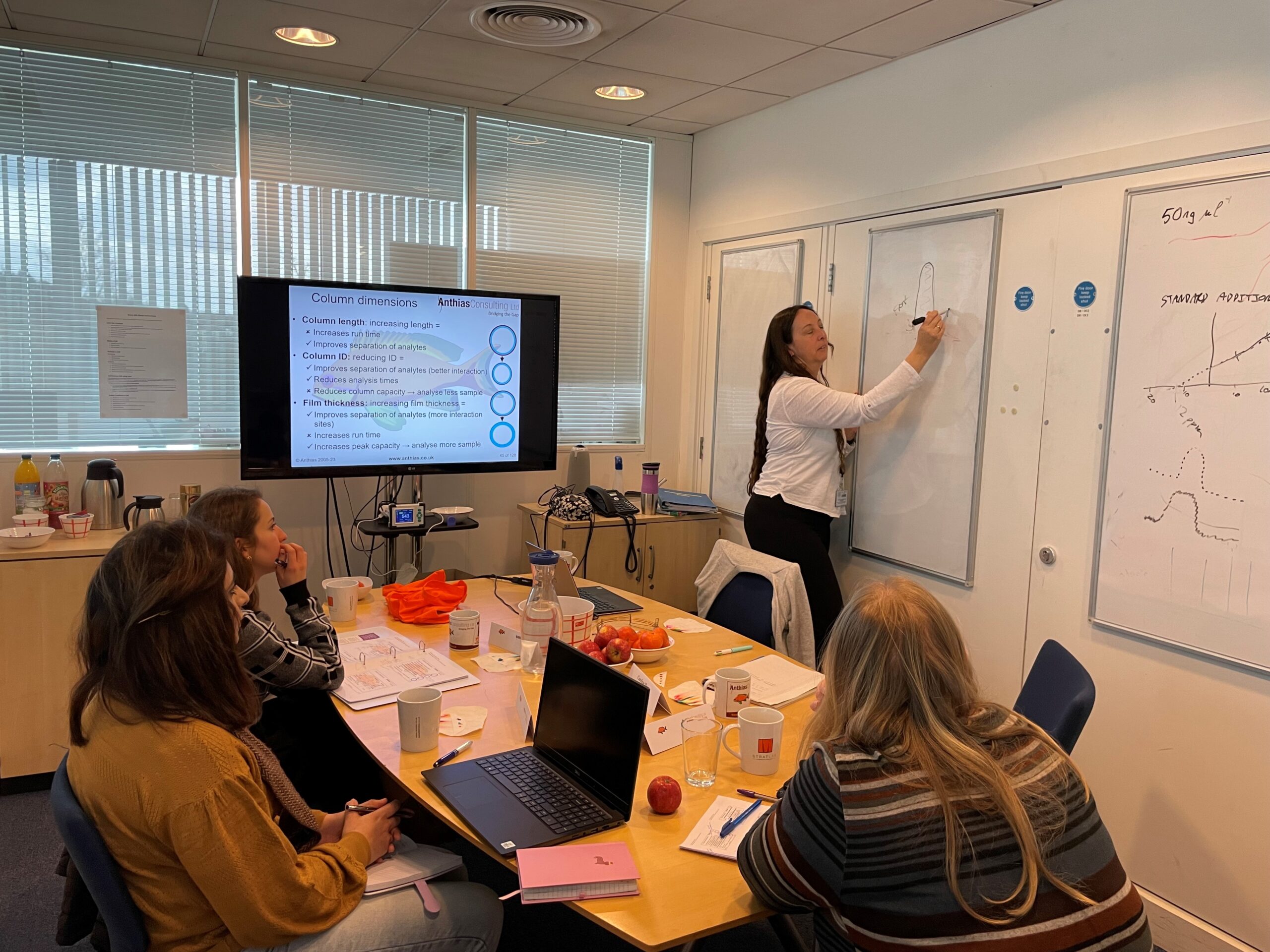
Your essential guide to gas chromatography (GC) columns
Module 4 of the Complete GC & GC-MS and the Practical Essentials of GC & GC-MS course.
Practical Essentials of GC Columns module is approved by the Royal Society of Chemistry (RSC) for the purposes of Continuing Professional Development (CPD). This training is designed for professionals, students and chemists who use GC and takes an in-depth look at different types of GC columns, types of stationary phases and analyte interactions to learn the fundamental theory and applications of analytical columns in GC from a chemistry perspective.
This module can be combined with any of the other twelve modules in the Complete GC and GC-MS to tailor your training needs.
Why should I join?
On completion of this module 4 training, you will have an overview of the various types and uses of analytical columns in GC, giving you:
- A clear overview of GC column types
- Explanations of stationary phases and how they influence separation
- Insight into column dimensions such as length, internal diameter and film thickness
- Knowledge of column efficiency, resolution and selectivity and how these can be optimised
- Practical guidance on choosing the right column for your own analysis back in the lab
- A valuable refresher for anyone who hasn’t interacted with GC instrumentation for a while
What would I learn?
This module focuses on explaining the importance of columns when it comes to using GC for analysis, you will learn:
- Different types of GC columns and when to use packed vs capillary formats
- Differences between WCOT and PLOT columns, including their applications and selectivity
- How separation occurs through partitioning and adsorption mechanisms
- The importance of column parameters to achieve optimal separation
- How temperature and carrier gas flow influence column performance and efficiency
What knowledge will I gain?
By the end of the module, you will:
- Know the principles and theory behind analytical columns in GC
- Be able to explain resolution, selectivity and retention in GC separations
- Know how to select stationary phases based on analyte polarity and volatility
- Be able to compare column types and configurations for various analytical challenges
- Understand band broadening, peak tailing and fronting, and how they can be minimised
- Learn how column dimensions and flow conditions affect analysis time and performance
- Be familiar with practices such as guard column use, retention gaps and backflushing to protect and optimise columns
Is this course for me?
This course is designed for anyone who would like to learn about columns in GC analysis.
- Laboratory analysts & technicians using GC and GC-MS
- Laboratory or line managers overseeing GC and GC-MS instruments and analysis
- Data analysts and report writers who work with GC and GC-MS
- Service engineers who want chemistry focused introduction to GC and GC-MS
- Sales, commercial or marketing teams who work with GC and GC-MS components, instruments, or services in anyway and would like more in-depth knowledge
If GC and GC-MS touches your work in any way, this well-planned course delivered by experts in the field equips you to understand the science behind these techniques.
Select the courses you are interested in:
Feedback from previous attendees
“Comprehensive knowledge about columns.” July 2020


