
Practical Essentials of GC sample introduction

- Duration: 4 hours for on-demand
- Experience level: Intermediate
- Delivery methods: Offsite training & consultancy | On-Demand | Online | Onsite training & consultancy | Tailored training |
- Type of course: Universal
- Applicable to manufacturer(s): Agilent | Bruker | CDS Analytical | CTC analytics | Frontier | GERSTEL | GL Sciences | Leco | OI Analytical | PerkinElmer | Scion | Shimadzu | SRI | Thermo | Varian | Waters |
- CPD Approved: Approved
- Scheduled course price: £260.00 + TAX per delegate
- Course discounts: RSC CAMS HEaTED Cambridge Network members receive a discount on this course
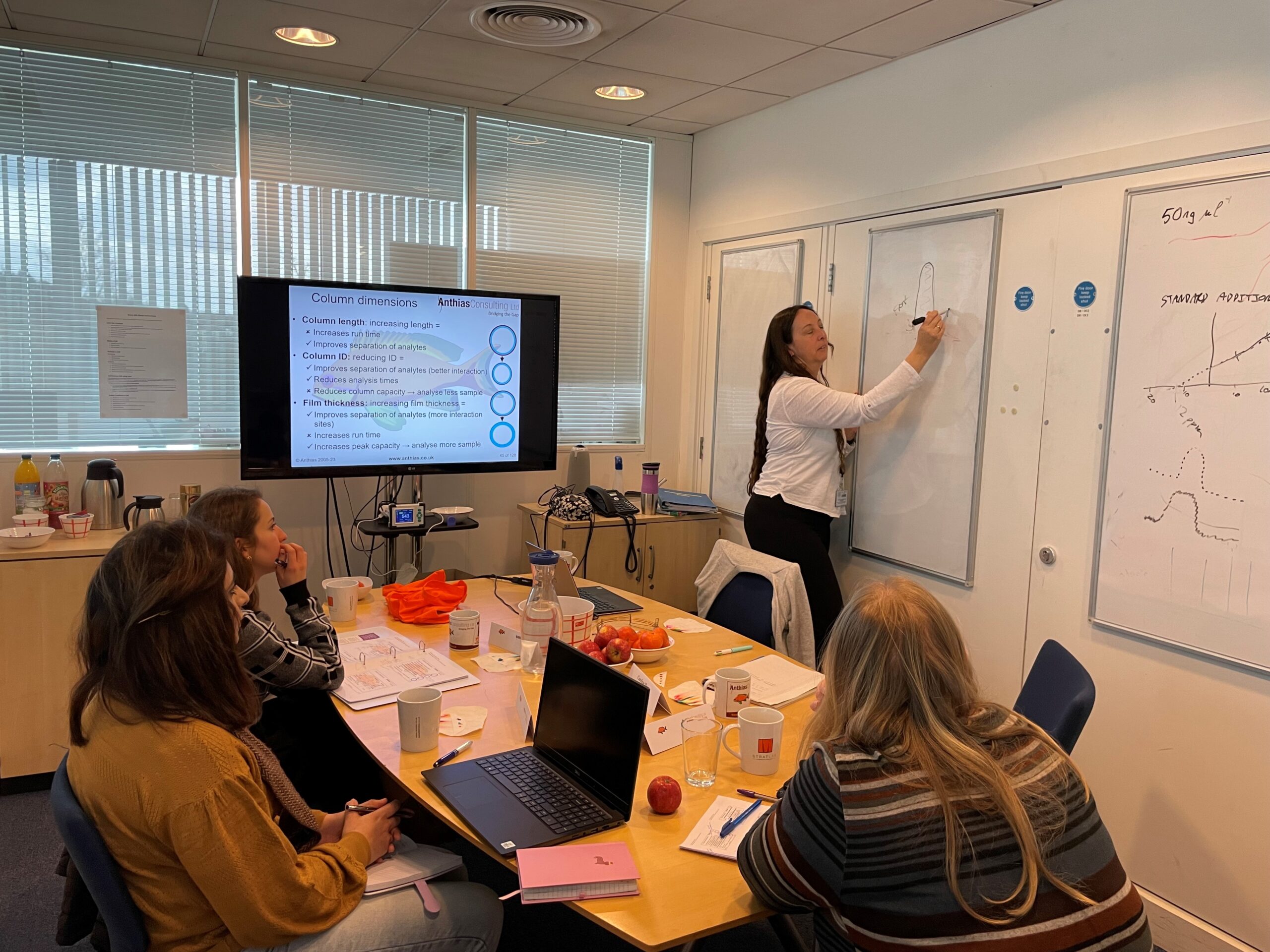
Your essential guide to gas chromatography (GC) sample introduction
Module 3 of the Complete GC & GC-MS and the Practical Essentials of GC & GC-MS course.
Practical Essentials of GC sample introduction module is approved by the Royal Society of Chemistry (RSC) for the purposes of Continuing Professional Development (CPD). Take an in-depth approach to several types of sample introduction techniques for GC, covering the theory, parameters and applications. This GC training is designed for professionals, students and chemists who want a full overview of GC sample introduction for use in their laboratories.
This module can be combined with any of the other twelve modules in the Complete GC and GC-MS to tailor your training needs
Why should I join?
On completion of this module 3 training, you will have a solid understanding and overview of importance of sample introduction for GC, giving you:
- A view of several GC inlet components such as septas and liners
- Clear explanations of how to choose the right liner for analysis
- Understanding of considerations required for the carrier gas
- Knowledge of the differences between various injection types
- Cover what parameters are required for the various injection types for GC
- A great refresher on GC sample introduction if you have not performed GC for a while
What would I learn?
This module focuses on explaining the importance of sample introduction when it comes to using GC for analysis, you will learn:
- Various GC injection types including split/splitless and on column, as well as their technique and principles
- What injection temperature (hot or cold) is required for the different inlet types
- How gaseous samples can be introduced into the GC system
- Pros and cons of the various injection methods for GC
- When and in what scenarios different injection techniques can be used
What knowledge will I gain?
By the end of the module, you will:
- Understand the principles and parameters of split and splitless injection
- Know the methods of large volume injection (LVI) including solvent elimination and rapid LVI
- Confidently compare the various methods of LVI and what analytes each type may be suited for
- Know the differences between the various gas sampling valves including rotary and slider valves
- Comprehend the parameters surrounding the various methods of LVI and how sample volume can vary
- Learn the importance of ferrule selection and how the various types are used in GC such as PTFE and metal ferrules
- Be familiar with the recommended set-up for GC with regards sample introduction
Is this course for me?
This course is designed for anyone who would like to learn about sample introduction for GC.
- Laboratory analysts & technicians using GC and GC-MS
- Laboratory or line managers overseeing GC and GC-MS instruments and analysis
- Data analysts and report writers who work with GC and GC-MS
- Service engineers who want chemistry focused introduction to GC and GC-MS
- Sales, commercial or marketing teams who work with GC and GC-MS components, instruments, or services in anyway and would like more in-depth knowledge
If GC and GC-MS touches your work in any way, this well-planned course delivered by experts in the field equips you to understand the science behind these techniques.
Select the courses you are interested in:
Feedback from previous attendees
“Comprehensive knowledge about sample introduction, particularly all the diagrams with a clear explanation from the instructor.” July 2020
“I found good details illustrated in the course materials and a clear explanation of each method and technique as well as the comparison of the methods and techniques are equally interesting and useful.” July 2020
Just some of the feedback from attendees of our face-to-face classroom course:
“Excellent descriptions of various methods of sample introduction into GC instruments. Information presented will be very useful to apply to my specific issues at work.”


