
Volunteering & support
Volunteering & support
RORO (Recycling Organisation Research Opportunities
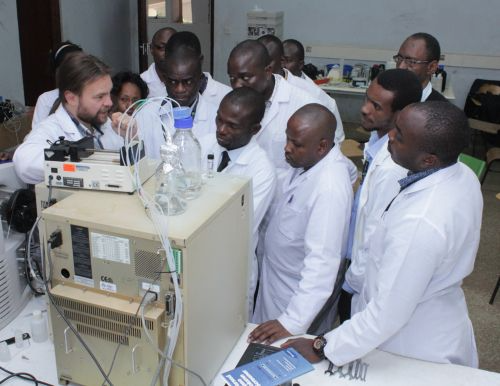
Dr Giles Edwards training delegates at the RSC PACN LC-MS workshop.
Anthias Consulting is very proud to support RORO (Recycling Organisation Research Opportunities). Anthias consultant, Dr Diane Turner, is a trustee and Dr Giles Edwards is the Technical Director & Founder Trustee for the charity.
The charity works to connect redundant analytical instrumentation with academic institutions in the developing world.
In September 2015, Dr Diane Turner and Dr Imran Janmohamed from Anthias Consulting worked with The Open University to configure and send a Gas Chromatograph with a Flame Ionization Detector (GC-FID) and autosampler for headspace and liquid injection, to the National University of Mongolia for air pollution analysis. Read the full story on International Labmate, which follows the journey from the initial assessment of what was needed, through to acquiring, testing, shipping and installation of the instrumentation.
RORO installed donated equipment that was then used for training at the first LC-MS workshop facilitated by the Royal Society of Chemistry Pan Africa Chemistry Network (PACN) at Jomo Kenyatta University of Agriculture and Technology (JKUAT) in Nairobi, Kenya, in September 2017. Dr Giles Edwards wrote the course materials, derived from the Anthias Consulting Complete LC & LC-MS and Applied Interpretation of LC-MS Spectra training course, as part of his work for Anthias Consulting and delivered the training with Prof Anthony Gachanja from JKUAT. Read more about the training here.
Read more about the partnership between RORO, universities, businesses and the RSC PACN in this article on the Royal Society of Chemistry’s website.
Find out more about RORO on the charity’s LinkedIn page.
Royal Society of Chemistry’s Pan Africa Chemistry Network (PACN)
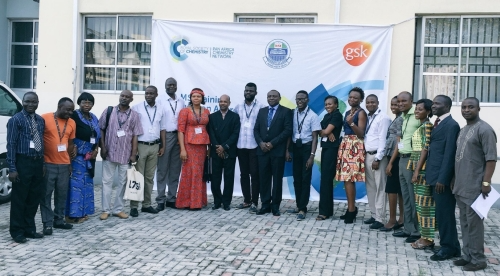
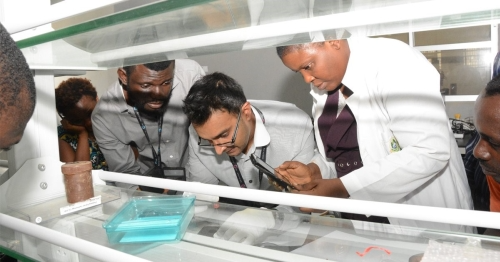
Between 2016 and 2020 Anthias Consulting was part of an ambitious partnership working with the Royal Society of Chemistry and GSK. This partnership increased the analytical chemistry skills across Africa, with courses held in Ethiopia, Ghana, Kenya and Nigeria. This training programme aimed to up-skill and empower scientists in Africa and develop practical analytical techniques to solve local challenges and contribute to global scientific knowledge. Anthias Consulting continues to support the PACN and the courses developed continue to be taught within the institutions involved.
In July 2018, Dr Giles Edwards from Anthias Consulting trained scientists at an LC-MS workshop which took place at Jomo Kenyatta University of Agriculture and Technology (JKUAT) in Nairobi, Kenya.
In November 2017, Dr Imran Janmohamed from Anthias Consulting delivered a GC & GC-MS training workshop at the University of Lagos. Read the article ‘Yams and omelettes – a journey to Nigeria’ on the RSC website, a day-by-day account of Imran’s experiences facilitating the course.
In September 2017, Dr Giles Edwards from Anthias Consulting delivered the first training course in liquid chromatography to delegates in Nairobi, Kenya. Read more about the training here.
In November 2016 Dr Imran Janmohamed from Anthias Consulting facilitated at the first GC-MS training course at the University of Lagos in Nigeria. You can read more about Imran’s visit below.
Pittcon
Pittcon is dedicated to advancing scientific progress through global collaboration, uniting a diverse community of scientists to share knowledge, drive innovation, and shape the future of laboratory science. As a catalyst for the exchange of ideas, Pittcon showcases the latest breakthroughs in laboratory technologies and serves as a hub for international scientific connection.
Beyond the technical program, Pittcon offers unparalleled networking opportunities, engaging social events, and a dynamic environment that encourages knowledge sharing and professional growth. It’s the ideal conference for anyone involved in the development, purchase, or sale of laboratory equipment; conducting physical or chemical analyses; designing analytical methods; or leading teams of scientific professionals.
Analytical Science Network

The Analytical Science Network (ASN) is a community specifically designed for early career analytical scientists that is funded by the Analytical Chemistry Trust Fund (ACTF). Its primary aim is to foster the careers of current and prospective analytical scientists while promoting analytical science to a broader audience. ASN comprises members from both industry and academia, representing a diverse range of analytical disciplines.
Anthias Consulting supports the ASN through promoting their events, sponsoring prizes and presenting workshops at their conferences.
Committees
Royal Society of Chemistry Book Editoral Board

Editorial board members are an integral part of academic publishing. They frame the breadth of chemical enquiry, ask crucial questions to delve further into research, and help guide the chemical science community towards future discoveries.
Offering their expertise to ensure outstanding, high-quality science, editorial board members define the scope of cutting-edge scientific literature.
Each Royal Society of Chemistry journal and book series has its own editorial board, which is responsible for deciding key elements of our publishing criteria, such as setting and maintaining the RSC scientific policies and standards. These boards are made up of leading scientists who are active in academia or industry, and they apply their knowledge and expertise to support the development of the journals and books, as well as uphold a consistently high standard of content. This work helps shape the future of the chemical science community.
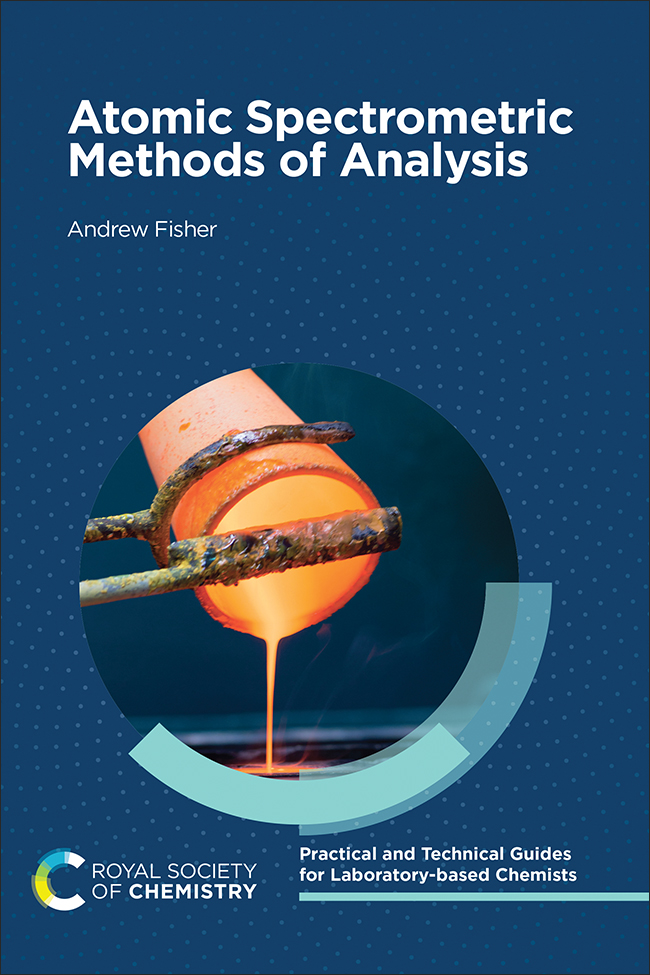
Diane Turner, Senior Consultant and Director, is one of the board members for the Practical and Technical Guides for Laboratory-based Chemists series. This series provides a suite of accessible, practical and technical guides for chemists and laboratory technicians to address the need for laboratory skills development. The topics covered are broadly in analytical science and chemistry. They are technical books to help develop skills, keep users up to date with technical developments, especially those that can save time and improve reliability, and provide guidance to ensure strict safety procedures and safety checks. The books are interdisciplinary so could be used in chemical, biological, physical and life sciences laboratories. The primary audience for the series is practising analytical chemists and scientific laboratory technicians across academia and industry including teaching laboratory technicians based in educational institutions, public health organisations and environmental agencies and utility companies.
Diane is one of the authors for the Gas Chromatography-Mass Spectrometry: How Do I Get the Best Results? book with the RSC. Throughout the book, case studies illustrate the practical process, the techniques used and any common challenges. Newcomers can easily search for answers to their question and find clear advice with coloured images on how to get started and all subsequent steps involved in using GC-MS as part of a research process or for routine analysis. Readers will find information on collecting and preparing samples, designing and validating methods, analysing results, and troubleshooting. Examples of pollutant, food, oil and fragrance analysis bring the theory to life.
Solutions in Science
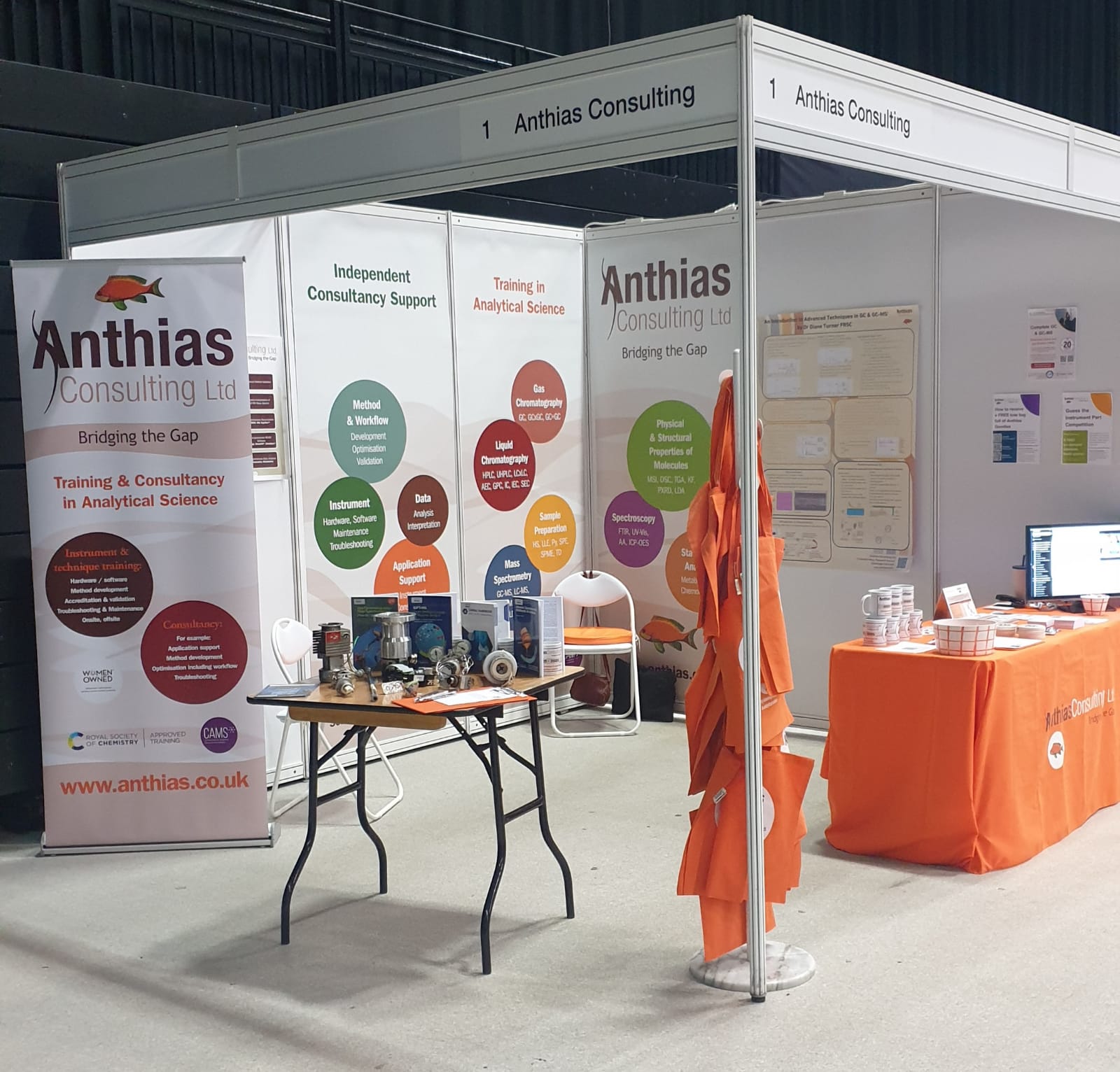
Solutions in Science (SinS) was originally conceived out of a desire to amalgamate many of the Royal Society of Chemistry’s Special Interest Group meetings into one larger and more comprehensive meeting. SinS showcases a complementary and diverse range of analytical topics which will allow for improved networking and collaboration between RSC interest groups and other learned and like-minded communities.
“SinS” brings together scientists and analytical chemists to discuss and explore the latest products, techniques and analytical Solutions. With “Sustainability” in mind one of the main aims of SinS is to bring together special interest groups to one large meeting rather than many smaller meetings which will cut down on travel and time but increase networking and information sharing capabilities.
Diane Turner has been an independent Scientific Committee Member for SinS (2022–present), and in particular, has overseen social media strategy and event growth, alongside chairing sessions and judging early career scientist posters and oral presentations.
International Women in Chromatography
The International Women in Chromatography is a professional community with a dedicated group on LinkedIn aiming to support and connect women and non-binary people working or studying in the field of chromatography.
Founded by Diane Turner, Jacqueline Hamilton, and Caroline Gauchotte-Lindsay in 2024, the LinkedIn group, which now as over 400 members, is there to create a supportive & inclusive environment where members can thrive professionally & personally, advancing chromatography research & innovation worldwide.
Government Chemist Programme Expert Group (GC-PEG)
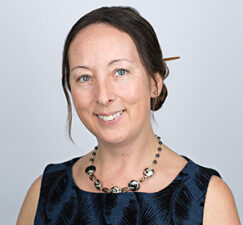
The Government Chemist Programme Expert Group meets twice a year and is comprised of an independent panel of experts who guide the work of the Government Chemist.
The aims of the Government Chemist, GC, function are to be an independent referee analyst resolving disputes that occur in relation to the described legislation, and an advisor to government, the public sector and the wider analytical community, where there are measurement science implications of existing and proposed legislation & regulation.
Diane has been the Royal Society of Chemistry (RSC) representative on the GC-PEG for Food and Agriculture since 2020, reporting back to the RSC Analytical Science Community Council.
CAMS BEAM board & DATT committee
The Building Effective Analytical Measurements (BEAM) panel of the Community for Analytical Measurement Science (CAMS) represents the membership of CAMS and has contributions from instrument manufacturers, training organisations, academia and industry, with a main objective to provide a range of training resources. The panel meets every three months to identify training gaps and needs in Analytical Chemistry. They work in partnership with other CAMS panels to develop and expand the teaching of analytical measurement science principles for UK benefit, making available resources to fulfil these needs.
Anthias Consulting is a member of CAMS and Diane Turner is on the panel, providing insights and ideas alongside free resources to CAMS members. As part of the membership, Anthias Consulting offers a free Absolute Basics course to all CAMS-funded PhD students and Researchers.
Diane is also using her knowledge and experience within the CAMS Data Analytics Teaching and Training (DATT) committee to look at how to improve teaching and training in data analytics.
The DATT committee invited partners and members to form the committee, ensuring a balanced mix of academics and industry professionals were at the forefront of the discussions. These discussions are held to identify focus areas and tasks, following insights gathered by surveys and determined the best approach to address them.
International Symposium on Chromatography
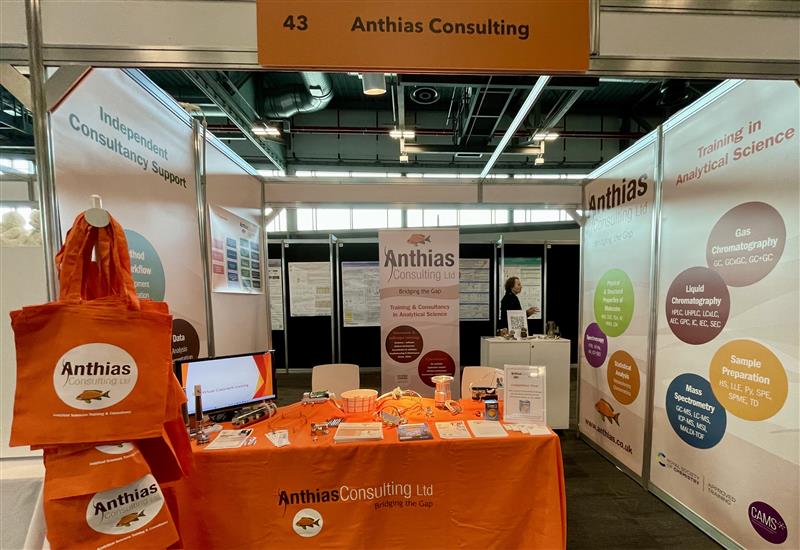
For the 2023 International Symposium on Chromatography (ISC), Diane was a Local Organising Committee Member. She worked on increasing the number of vendors exhibiting and sponsoring; improving the LinkedIn page and massively growing follower numbers alongside posting information; and general marketing tasks.
At the conference, Diane chaired multiple sessions, including a plenary speaker, judged posters, gave a tutorial and ran a networking session to launch the International Women in Chromatography Community.
Outreach
Meteorites
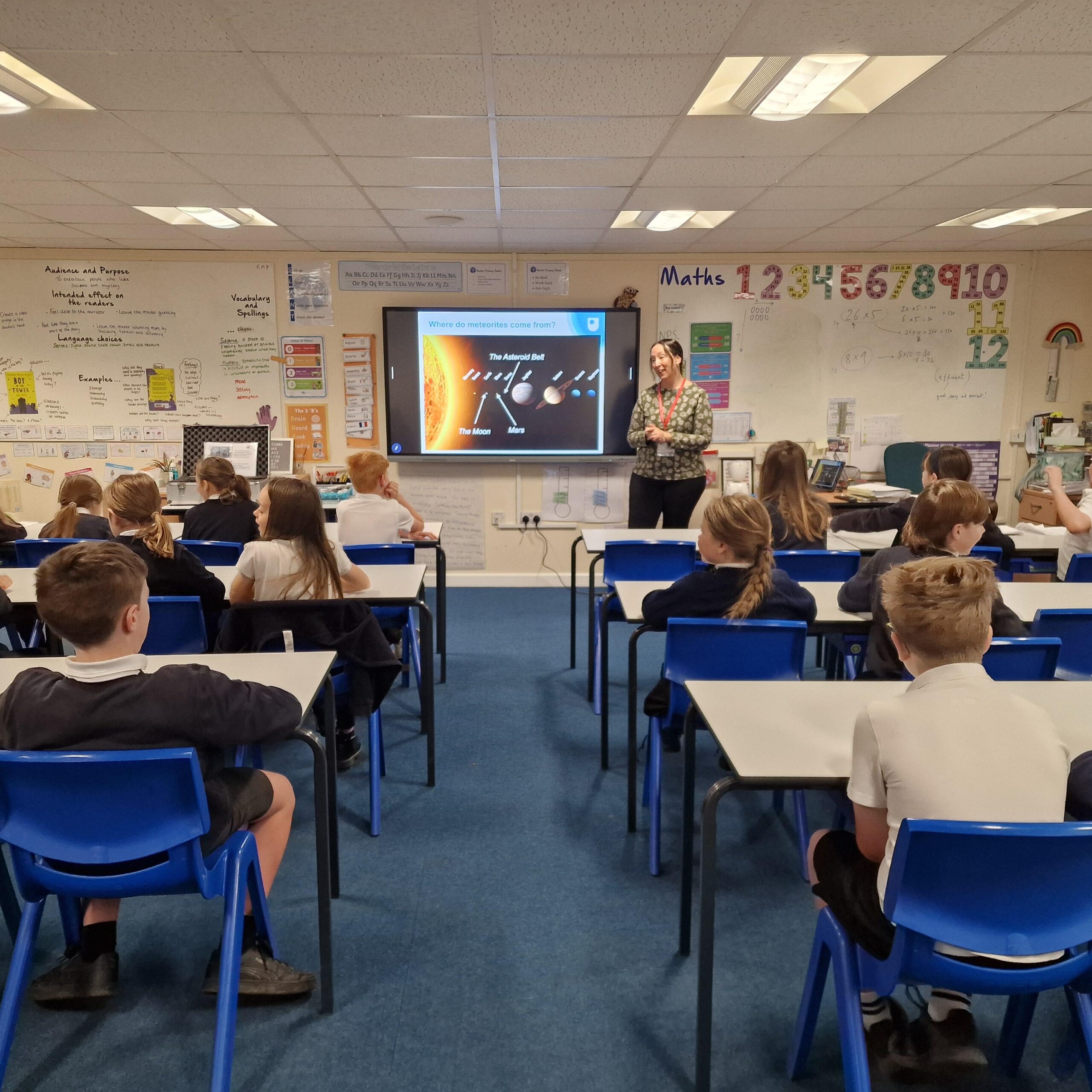
In March 2025, during British Science Week, Dr. Diane Turner embarked on an outreach tour across Cambridgeshire to showcase pieces from one of space science’s most fascinating subjects, meteorites. These extraordinary rocks, which survive the intense heat of entry through Earth’s atmosphere and land on our planet’s surface, offer a considerable link to the early solar system.
Meteorites come in three main types, stones, stony-irons, and irons and are further classified into primitive and processed groups. Primitive meteorites are particularly valuable to scientists because they retain the chemical makeup of the solar nebula, the cloud of gas and dust from which our Solar System formed over 4.5 billion years ago. Processed meteorites, on the other hand, originate from larger, differentiated bodies such as asteroids or even planetary crusts and cores, providing rare insights into planetary geology.
Although they can resemble ordinary rocks, meteorites often bear a distinctive dark, fusion crust formed during their high-speed journey through Earth’s atmosphere. Some are rich in metal, especially nickel-iron, which makes them magnetic and slightly easier to identify in the field.
The Open University in Milton Keynes, houses one of the UK’s most significant collections, comprising around 50,000 meteorite samples.
We spoke with several colleges and community centres that hosted Dr. Diane Turner to hear about their recent experiences engaging with real meteorite samples up close. For more on this, read our full article here.
Form the future
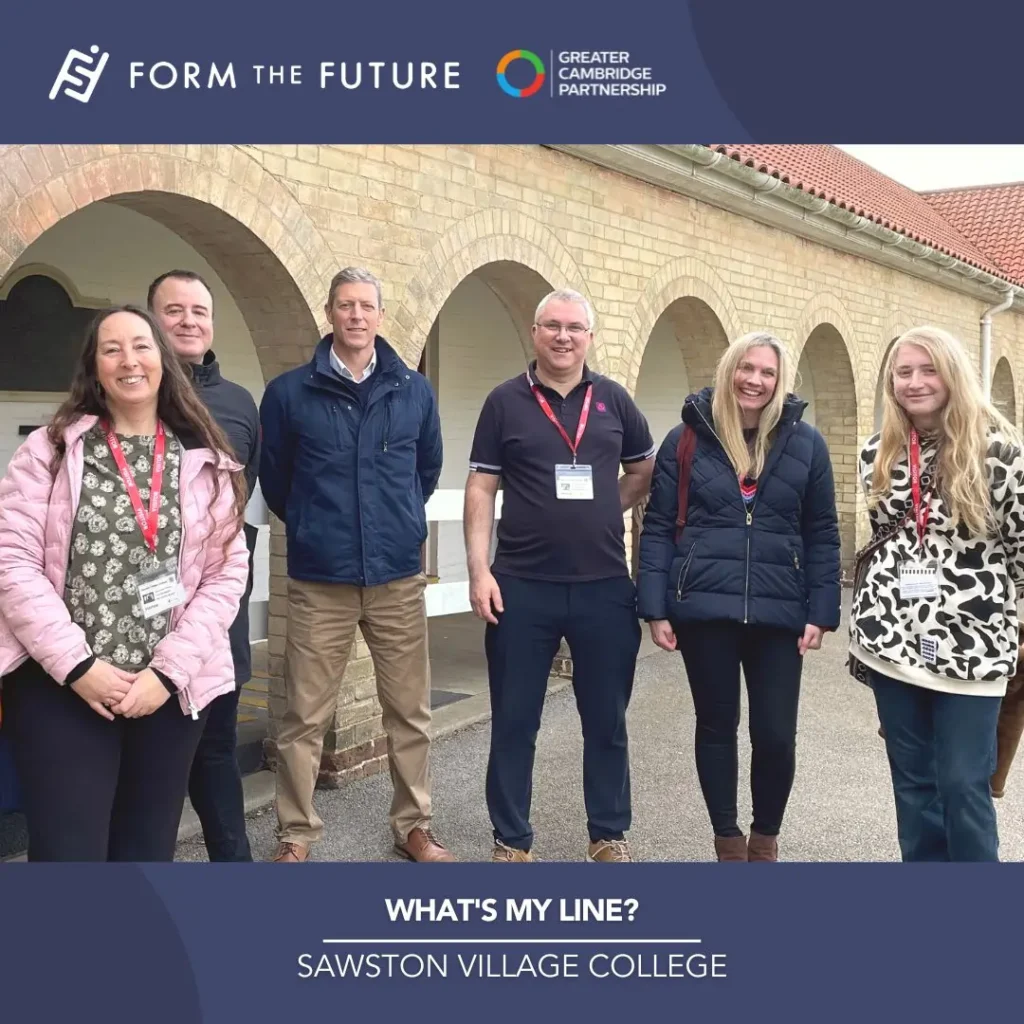
Form the future helps young people to discover and prepare for opportunities in the high-growth sectors on their doorsteps. With volunteers from business, they help students develop employability skills, careers awareness, motivation and ambition. They are schools’ trusted partner for careers education to generate a future talent pipeline.
Diane has been an for Form the Future since 2017, visiting local schools around Cambridgeshire to take part in career events that help educate students on careers in analytical chemistry. Diane regularly takes part in ‘Whats my line?’ events where usually Year 7 students have to guess her job by asking questions that she can only answer with a yes or no, very occasionally a class will guess without any hints! ‘Careers carousel’ events, usually with Year 8 or 9 students, enable Diane to give an insight her daily work, depending on the questions asked this sometimes leads into jobs and industries involved in analytical chemistry and at other times leads into being a micro-business owner. Diane is also involved in mock interviews with Year 10 students.
I'm a Scientist
I’m a Scientist is a student-led STEM enrichment activity. It connects school students with scientists through energetic real-time text-based chats, to help them discover STEM careers, ask questions and learn about the industry.
I’m a Scientist engages all students and supports their Science Capital through showing STEM to be personally relevant to students lives. It produces and values students’ questions and experiences, and provides support for building dimensions of science capital. They run themed activities that mean teachers can closely match the I’m a Scientist activity to their class’s current curriculum learning.
Diane has been an I’m a Scientist member since 2024, participating in the 30-minute chats with primary and secondary schools and 6th form colleges all over the UK whenever she has a spare few hours. Most of the questions asked are brilliant, from finding out which GCSEs or A’Levels were most useful for her career (these do include GCSEs in English and Drama) to finding out about the applications she has been involved in across many different industries to asking how she balances work, travel and family plus everything in-between.


