
Hands-on HPLC theory and methods

- Duration: 1 day for live courses
- Experience level: Intermediate
- Delivery methods: Face-to-face | Offsite training & consultancy | Onsite training & consultancy | Tailored training |
- Type of course: Universal
- Applicable to manufacturer(s): Agilent | JASCO | PerkinElmer | Scion | Shimadzu | Thermo | Waters |
- CPD Approved: Approved
- Scheduled course price: £650.00 + TAX per delegate
- Course discounts: RSC CAMS HEaTED Cambridge Network members receive a discount on this course
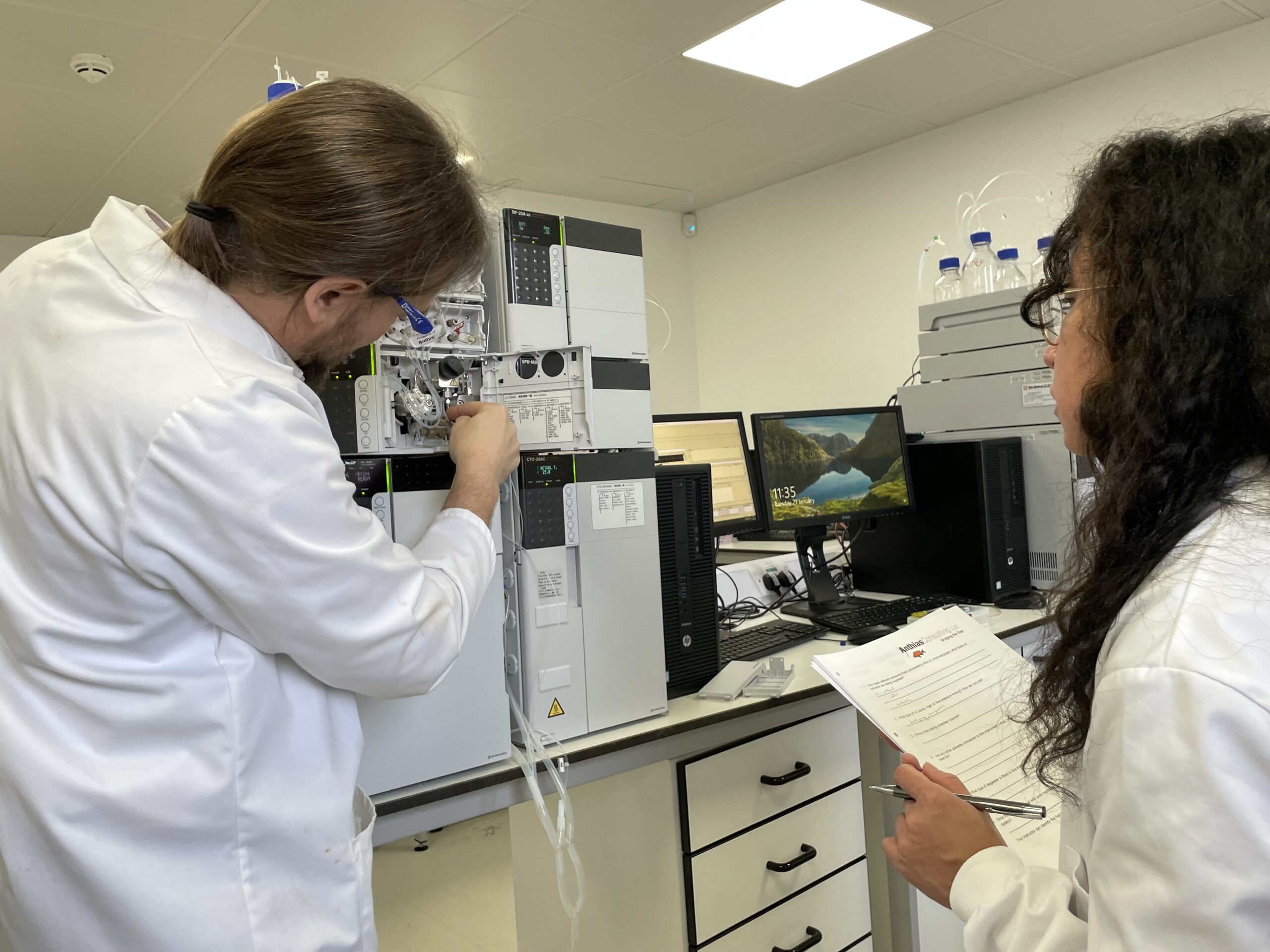
Your Hands-on approach to learning high-performance liquid chromatography (HPLC) theory and methods
Day 1 of our Hands-on HPLC and LC-MS.
Combine the practical theory of HPLC with laboratory-based exercises in this Royal Society of Chemistry (RSC) approved training for the purposes of Continued Professional Development (CPD). This course is designed to bridge the gap between theory and practice, enabling you to confidently use HPLC instrumentation within the laboratory.
This Hands-on course is ideal for students, analysts and professionals who want to gain practical experience with all aspects of HPLC including mobile phase preparation, sample introduction, stationary phases, analytical columns, chromatographic separations, detectors, and data analysis. Learn how compounds are separated, detected, and quantified while developing the practical skills needed to create methods, optimise separations and interpret analytical results.
Why should I join?
On completion, you will have both the theoretical knowledge and practical experience required to confidently operate and optimise HPLC systems in your laboratory.
This Hands-on HPLC theory and methods course gives you:
- Strong theoretical and practical skills for using HPLC instrumentation
- Practical guidance on mobile phase preparation, sample introduction, and chromatographic separations
- Hands-on experience creating and optimising HPLC methods
- An understanding of isocratic and gradient method development
- Practical experience working with HPLC autosamplers, columns, and detectors
- Confidence interpreting chromatograms and analytical data
- A structured approach to selecting suitable chromatographic conditions for different applications
What would I learn?
A user-friendly HPLC course that combines in-depth theory with practical laboratory exercises, you will learn:
- The principles behind liquid chromatography and how chromatographic separations are achieved
- The relationship between mobile phases, stationary phases, and analyte retention
- How to prepare, filter and degas mobile phases correctly
- The principles of normal phase and reversed phase chromatography
- How to optimise isocratic and gradient methods
- The operation and applications of HPLC pumps, autosamplers, and injection systems
- The role of analytical columns and the factors that influence chromatographic selectivity and resolution
- The principles and applications of common HPLC detectors including UV-Vis, PDA, fluorescence, RI, and CAD
- How chromatographic data is processed, integrated, and interpreted
- Quantitative analysis approaches including area percent, external standard, and internal standard calibration methods
What knowledge will I gain?
- Understand the complete HPLC analytical workflow from sample preparation through chromatographic separation to data interpretation and reporting
- Be confident discussing HPLC instrumentation, operating principles, and applications
- Understand how mobile phase composition, pH, buffers, and temperature influence chromatographic performance
- Explain the influence of stationary phase chemistry, column dimensions, and particle size on separation quality
- Understand the factors affecting retention, selectivity, resolution, and efficiency
- Recognise the strengths and limitations of different HPLC detector technologies
- Interpret chromatograms and evaluate retention times, peak areas, peak shapes, and detector responses
- Understand calibration strategies and quantitative analysis workflows
- Apply method development principles to improve chromatographic separations and analytical performance
Is this course for me?
This RSC approved course for purposes of CPD training is designed for anyone who needs both a theoretical and practical understanding of HPLC, including:
- Analysts & technicians requiring training or a clear structured refresher of HPLC and LC-MS
- Laboratory or line managers overseeing HPLC and LC-MS instrumentation
- Data analysts and report writers who interpret results but do not use the instruments
- Service and consultant engineers who need both a theoretical and hands-on reminder
- Sales, marketing, or commercial teams working with HPLC and LC-MS systems, consumables, data, or laboratory services
If HPLC and LC-MS touches your work in any way, this well-planned course delivered by experts in the field equips you to understand the science behind these techniques.
Course combinations
Can’t attend the full course? No worries, combine days or modules to create training that works best for you. The more days you book the larger the discount.
- For 2 days, pay £1250
- For 3 days, pay £1825
- For 4 days, pay £2350
- For 5 days, pay £2850
Please note, discounts won’t apply when booking but will appear on your invoice.


