
Absolute Basics of Deconvolution
- Duration: 1 day for live courses 6.50 hours for on-demand
- Experience level: Beginners
- Delivery methods: Face-to-face | Offsite training & consultancy | On-Demand | Online | Onsite training & consultancy | Tailored training |
- Type of course: Universal
- Applicable to manufacturer(s): Agilent | NIST |
- CPD Approved: Not yet approved
- Scheduled course price: £385.00 + TAX per delegate
- Course discounts: RSC CAMS HEaTED Cambridge Network members receive a discount on this course
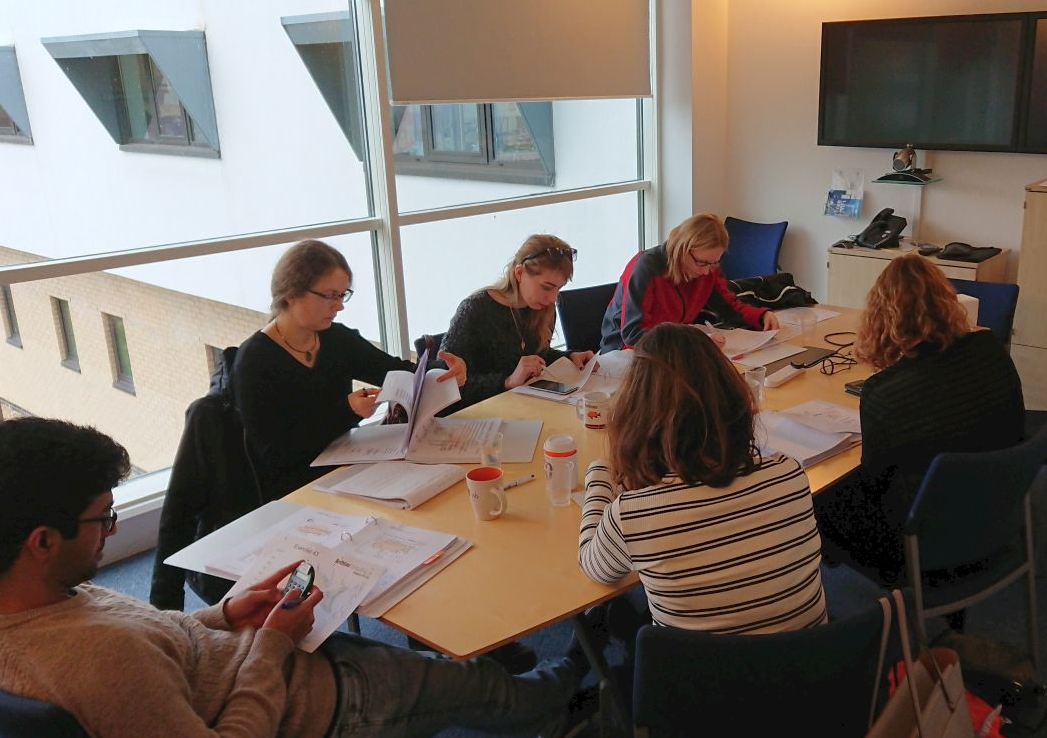
Your beginner’s guide to deconvolution
Learn the fundamentals of mass spectral deconvolution, with this 1-day classroom-based beginners course for professionals and students. This introduction will take you through mass spectral deconvolution from first principles, using the analytical chemistry technique gas chromatography mass-spectrometry (GC-MS) data as the starting point for implementing deconvolution to aid data interpretation in complex sample analysis.
Whether you’re stepping into the world of deconvolution for the first time, or looking to refresh your deconvolution understanding, this essential deconvolution training course gives you the knowledge to use deconvolution to discover co-eluting peaks and those under the baseline in complex mixtures then extract cleaned-up mass spectra for quantitation or identification using library searching or mass spectral interpretation.
Why should I join?
On completion, you will be able to understand what defines deconvolution and its typical applications to find and identify compounds in complex samples. The course includes examples of deconvolution software such as the Automatic Mass Spectral Deconvolution and Identification Software (AMDIS) and its combination with the National Institute of Standards and Technology (NIST) libraries, and how these tools aid and reduce efforts in identifying compounds analysed by GC-MS.
This deconvolution training course gives you:
- A solid understanding of deconvolution and the benefits in analysis of 3D data
- Clear explanation of deconvolution and its applications to data interpretation
- Insights into techniques where deconvolution can be used including GC-MS, LC-MS, LC-UV-Vis and GC-FTIR data
- Understanding mass spectra, what they show and how this data is obtained
- Familiarity with types of analysis including use of retention indices/time for identification
- Practical demonstrations, showing deconvolution, library searching, deconvolution settings, using retention time/indices and examining library files
- A great summary of deconvolution aided with an acronym glossary
This is your opportunity to learn mass spectral deconvolution and, how it can aid your own data analysis
What would I learn?
A beginner‑friendly introductory course focusing on the why, what, how, where and when of deconvolution, including:
- Why we use deconvolution
- The use of deconvolution for helping detect and identify unknown compounds and in target analysis
- Why deconvolution can be used to detect co-eluting peaks in, for example, GC-MS
- Why deconvolution is used for extracting clean mass spectra from GC-MS data
- What deconvolution is
- What defines deconvolution and its use in separating combined peaks
- What common terminology is used in deconvolution
- What AMDIS is and how it can be combined with NIST search libraries as the example software
- How deconvolution works
- The core principles behind deconvolution
- How to obtain high-quality data suitable for deconvolution
- How AMDIS works from noise analysis to then providing full spectrum deconvolution
- How spectral de-skewing works in deconvolution
- A step-by-step approach to the full deconvolution process
- Where deconvolution is involved
- The uses of deconvolution for data processing in both qualitative and quantitative analyses
- Where deconvolution can aid in target and unknown compound identification in complex mixtures
- Deconvolution is demonstrated for target analysis using AMDIS
- When deconvolution is the right choice
- When to make the most of your 3D data using both chromatographic and spectral resolution
- When to change deconvolution settings and the various modes of deconvolution software are demonstrated using AMDIS
What knowledge will I gain?
By the end of the course, you will:
- Understand the principles and concepts of deconvolution
- Know the terminology behind deconvolution and how to apply it workflows
- Feel confident discussing deconvolution and applying it to analytical data
- Understand the need and benefits of using deconvolution for mass spectral data
- Have a good insight into AMDIS software which you will have with your NIST library
This course gives you the language and understanding needed to use deconvolution with everyday analytical data.
Is this course for me?
This training is designed for anyone who needs an introduction to deconvolution, including:
- For beginners to deconvolution
- Analysts & technicians wanting a clear, structured refresher
- Laboratory or line managers overseeing analytical data
- Data analysts and report writers who interpret results but don’t use the instruments
- Service and consultant engineers who use deconvolution
- Sales, marketing or commercial teams working with mass spectral data
Delegates must have a good understanding of analytical science and ideally have in-depth knowledge of at least one analytical chemistry technique that can produce 3D mass spectral data
If deconvolution touches your work in any way, this well-planned course delivered by experts in the field equips you to understand how to apply this to your everyday work.
What's next?
Feedback from previous attendees
“Relevant to me, I have AMDIS software but never fully know how best to use it. Online recording was clear and I was able to play back bits at will allowing me to flexible go through the content in my own time”, Senior Technologist, 2026
“The pacing of the course was really good; there was plenty of time for questions to be raised (in the recording) and for discussion. As I watched a recording, I was able to pause & make notes, & was able to try the deconvolution settings, then return to the recording as needed to check/clarify details.” Senior scientist, 2025
“Seeing practical examples of how deconvolution pulled out hits that you otherwise thought wasn’t possible. Seeing what the different parameters are and how they can help in the deconvolution process.” February 2022.
“Diane is an excellent teacher. She explained everything very well and took time to answer all our questions.”
“Better balance of theory, application and practical demonstration.”
“The topic was well explained. There was a lot of information that was new to me and the team but Diane managed to keep us all focused. We found it all useful. We all feel that we now have a much better understanding of both NIST and AMDIS .” Delegate from flavour and fragrance industry, attended bespoke Basics of Deconvolution (NIST AMDIS) training, October 2016.


