
Hands-on GC and GC-MS

- Duration: 5 days for live courses
- Experience level: Intermediate
- Delivery methods: Face-to-face | Offsite training & consultancy | Onsite training & consultancy | Tailored training |
- Type of course: Universal
- Applicable to manufacturer(s): Agilent | Bruker | Leco | PerkinElmer | Scion | Shimadzu | SRI | Thermo | Varian | Waters |
- CPD Approved: Approved
- Scheduled course price: £2,850.00 + TAX per delegate
- Course discounts: RSC CAMS HEaTED Cambridge Network members receive a discount on this course
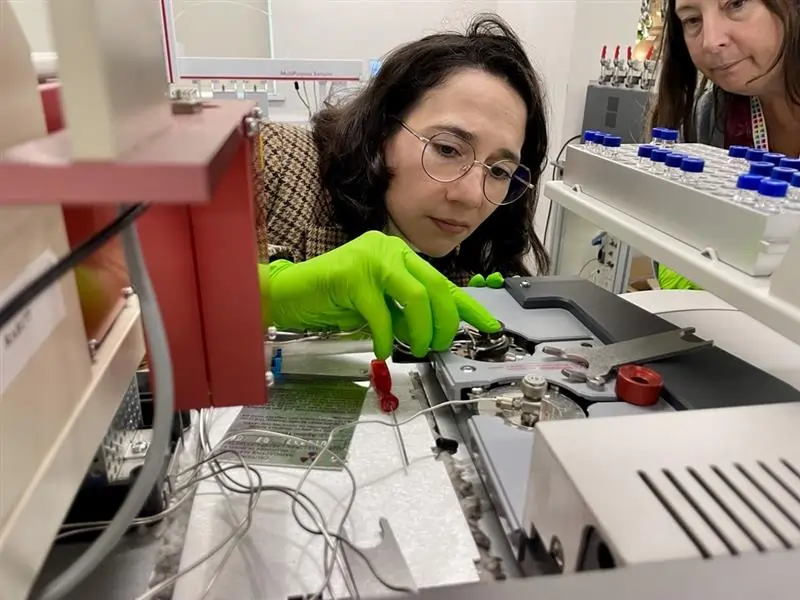
Your Hands-on approach to learning Gas Chromatography (GC) and Gas Chromatography–Mass Spectrometry (GC-MS)
Combine the practical theory of Gas Chromatography (GC) and Gas Chromatography–Mass Spectrometry (GC-MS) with extensive laboratory-based exercises in this Royal Society of Chemistry (RSC) approved training for purposes of Continued Professional Development (CPD). This 5-day hands-on course is designed to bridge the gap between theory and practice, allowing you to apply the knowledge learnt to instrumentation within the laboratory. Gain experience with all aspects of GC and GC-MS including gases and plumbing, sample introduction, analytical columns, GC detectors, mass spectrometers and data analysis. Using this knowledge, create methods, perform injections and change parameters to see the effects. This course combines GC theory and methods, GC maintenance, GC-MS theory and methods, GC-MS maintenance and GC and GC-MS troubleshooting.
This Hands-on GC & GC-MS course is ideal for analysts, students and professionals who already possess a basic understanding of chromatography and would like to develop a more in-depth knowledge of GC and GC-MS, together with the practical skills needed to operate, maintain and troubleshoot instrumentation.
Why should I join?
On completion, you will have both the theoretical knowledge and practical experience required to confidently operate, optimise, maintain and troubleshoot GC and GC-MS systems in your laboratory environment.
This Hands-on GC & GC-MS course gives you:
- Strong theoretical and practical skills for using GC and GC-MS instrumentation
- Clear explanations and examples of GC and GC-MS instrumentation, components and workflows
- Practical guidance on sample introduction, chromatographic separations and mass spectral analysis
- An understanding of method development and optimisation for both GC and GC-MS applications
- Hands-on experience of routine maintenance procedures and preventative maintenance schedules
- A structured approach to troubleshooting common chromatographic and mass spectrometric problems
- Insight into GC-MS vacuum systems, tuning procedures and performance verification
- A valuable refresher for experienced users who have not used GC or GC-MS for some time
What would I learn?
A user-friendly GC and GC-MS course that combines in-depth theory with practical laboratory exercises, you will learn:
- The principles behind gas chromatography and how chromatographic separations are achieved
- How GC and mass spectrometry are hyphenated together to provide powerful analytical capabilities
- The function of key GC components including carrier gas systems, autosamplers, inlets, columns, ovens and detectors
- The theory of mass spectrometry, including ionisation, fragmentation and mass analysis
- The operation of common mass analysers and vacuum systems used in GC-MS instrumentation
- How to optimise chromatographic separations, improve sensitivity and achieve robust analytical performance
- The principles of GC-MS tuning, calibration and performance monitoring
- How to perform routine maintenance on GC and GC-MS instrumentation safely and effectively
- How to identify, diagnose and correct common operational and analytical problems
What knowledge will I gain?
- Understand the complete analytical pathway from sample introduction through to chromatographic separation, mass spectral detection and data analysis
- Be confident discussing the theory, operation and applications of GC and GC-MS instrumentation
- Understand carrier gas selection, gas quality requirements and gas management systems
- Explain the influence of injection techniques, columns and detectors on analytical performance
- Understand vacuum systems, leak detection, air and water monitoring, and their impact on sensitivity and reliability
- Perform routine maintenance on autosamplers, inlets, columns, ion sources, vacuum pumps and detectors
- Recognise and troubleshoot common chromatographic issues including leaks, contamination, peak tailing, peak fronting, bleed and sensitivity loss
- Interpret tune reports, mass spectra and instrument diagnostics to identify developing problems before they affect analytical performance
- Create and implement preventative maintenance programmes to maximise instrument uptime and performance
- Comprehend the principles behind data generation, integration, interpretation and reporting in both GC and GC-MS analyses
Is this course for me?
This RSC approved for CPD training is designed for anyone who needs both a theoretical and practical grasp of GC and GC-MS, including:
- Analysts & technicians requiring training or a clear structured refresher of GC and GC-MS
- Laboratory or line managers overseeing GC and GC-MS instrumentation
- Data analysts and report writers who interpret results but don’t use the instruments
- Service and consultant engineers who need both a theoretical and a hands-on reminder
- Sales, marketing or commercial teams working with GC and GC-MS systems, consumables, data or laboratory services
If GC and GC-MS touches your work in any way, this well-planned course delivered by experts in the field equips you to understand the science behind these techniques.
Course combinations
Can’t attend the full course? No worries, combine days or modules to create training that works best for you. The more days you book the larger the discount.
- For 2 days, pay £1250
- For 3 days, pay £1825
- For 4 days, pay £2350
- For 5 days, pay £2850
Please note, discounts won’t apply when booking but will appear on your invoice.
What's next?
Feedback from previous attendees
“I enjoyed the different practical exercises, especially assembling the ion source and cutting the column which was done offline. Going through everything, what’s happening in a certain part of the instrument gave me (a lot actually) ideas about the terms and troubleshooting, identifying the problems that I can easily communicate with my colleagues or managers.” GCMS Analyst, 2025
“I enjoyed the theory part and then the hands-on part of course was very good. I learnt a lot about our instrument and have good information to take home. Very happy with the course.” Lab Engineer, 2025
“This course gave me chance to talk over/back up my knowledge already with an expert.” Lab Analyst, 2025
“I recently had the pleasure of attending this training led by Diane, and it was an outstanding experience. Diane’s expertise in the subject matter is evident from the moment she begins speaking. She has a remarkable ability to break down complex concepts into understandable segments, making the training accessible to everyone, regardless of their prior knowledge. Diane’s teaching style is engaging and interactive, encouraging participants to ask questions and actively participate in discussions. She uses real-world examples to illustrate key points, which greatly enhances the learning experience. Her patience and willingness to ensure that everyone grasps the material are truly commendable. Moreover, Diane’s enthusiasm for GC/MS is contagious. Not only does she impart knowledge but she also inspires a genuine interest in the subject. By the end of the training, I felt confident in my understanding of GC/MS and I was eager to apply what I had learned. Overall, Diane’s GC/MS training is top-notch. I highly recommend it to anyone looking to deepen their understanding of this important analytical technique.” – Gala Carballeira, Analytical Chemist at Unilever, (October 2024).
“(I enjoyed) theory and background knowledge to understand why we do in specific way. Hands on application and theory.” Agnes Csortan, Shift Analyst, IFF (September 2022).
“I loved switching between theory and practical. I liked small groups, easy to communicate and get involved.” Abigail Harrison, Analytical Chemist, Fuji Film Speciality Ink Systems (July 2022).
“The volume of material and delivery of it is excellent. (I enjoyed) Maintenance – taking apart the ion source.” Kate O’Connell, Analytical Researcher, Teva (July 2022).
“(I enjoyed) Hands-on practicals. Better [compared to other courses] as has instruments to use/repair.” Glenn Feighan, Lab Instrument Engineer, Mitie – GSK (July 2022).
“I really enjoyed everything in the course. The theory and practical side of the course are very good and very relatable. Diane is very knowledgeable and always ensured we fully understand the topic and also highlighted a lot of extra tips when it comes to the maintenance and troubleshooting of GC.” July 2022.
“(I enjoyed) the variable learning techniques and gaining knowledge of inlets and how to take them apart and different parts to them.” Lois Oddie, Analytical Support Chemist, Mexichem UK (September 2019).
“Much more in-depth than standard training which came with instrument.” Mathew Jones, Research Scientist, Dyson Ltd (June 2019).
“[I enjoyed the] balance between theoretical and practical courses.” Arlavinda Rezqita, Scientist, Austrian Institute of Technology (June 2019).
“[I enjoyed the] hands on practice.” Nisha Panchal, Research Technician, The Open University (June 2019).
“Good combination of theory and practical.” Ayesha Naeem, Laboratory Technician, Smiths Detection (February 2019).
“[I enjoyed the] practical knowledge.” Aijaz Naseem, Service Engineer, PetroScientific Middle East (February 2019).
“[I enjoyed the] hands on working on instrument. (Most interesting topic): practical problems on troubleshooting.” Research Scientist from the drinks industry (February 2019).
“[I enjoyed the] practical side. (Most interesting topic): Maintenance – changing liner and column etc.” Science Technician from a UK university (February 2019).
“Enjoyed the whole experience, particularly the hands-on practicals.” Craig Gazzard, Lab Analyst, Coryton Advanced Fuels (September 2018).
“[I enjoyed] how eye-opening it was with regards to the layers of GC-MS and the theory behind it.” Jasmin Hunt, Materials Quality Controller, Clean Tech (September 2018).
“[I enjoyed] the practicals and the relaxed manner of presenting all covered topics. More detailed and a lot more practical (hands-on) [compared to other courses].” Barbara Kaker, Research Assistant, University of Maribor, Slovenia (September 2018).
“[I enjoyed] the mix of hands-on and theory.” PhD student (September 2018).
“Very good. [I enjoyed] complete course, especially question and answer sessions.” Syed Osaid, Service Engineer, PetroScientific Middle East, April 2018.
“[I enjoyed] lecture and hands-on, practical test.” Irfan Ahmed, Service Engineer, PetroScientific Middle East (April 2018).
“[I enjoyed] the hands on and the detailed theory of the chromatography along with the detailed troubleshooting and maintenance exercises.” Muhammad Mohsin, Service Engineer, PetroScientific Middle East (April 2018).
“I found this course good. [I enjoyed] the way of instructions along with hands on practical exercise.” Junaid Ahmed, Resident Engineer, PetroScientific Middle East (April 2018).
“Well presented in a relaxed manner where you were able to ask questions and see answers in practical and literature.” Stephen Martin, Engineer, Speck & Burke (February 2018).
“The practicals were very useful and it was good to get some hands-on practice. Very informative and hands-on. Covered a wide range of applications (not just pharma!).” Sara Viney, Research Technician, University of Leeds (February 2018).
“Very good. (I enjoyed) being given so much useful information.” Kelleigh Greene, PhD Student, The Open University (February 2018).
“(I enjoyed) hands-on maintenance – taking apart inlet and FID.” Emily Rose, Analytical Chemist Apprentice, Green Biologics Ltd (attended 2-day Hands-on GC Theory & Maintenance and Troubleshooting (Feburary 2018).
“Very good here with the mix of theory and practical sessions.” Solweig Egnerfors, Hospital Chemist, Karolinska University Hospital (November 2017).
“Excellent. (I enjoyed the) mixture between theory and on hands practicals.” delegate from the food and drink industry, attended 3-day Hands-on GC-MS, Maintenance & Troubleshooting (November 2017).
“Good knowledgeable instructor who answered most of the questions and always gave good explanations.” Rachael Hamp, PhD Student, The Open University (November 2017).
“(I enjoyed the) combination of classroom and laboratory work.” Lucy Coppin, Research Lab Technician, University Of Surrey (September 2017).
“(I enjoyed the) troubleshooting part to look at practical problems.” Miaosi Li, Research Fellow, RMIT Australia (September 2017).
“(I enjoyed) the hands on experience of different equipment and equipment I have.” delegate from the ink industry (September 2017).
“(I enjoyed) the small group setting.” : delegate from a UK government agency (September 2017).
“(I enjoyed) the hardware work on the GC-GC-MS.” delegate from the biotechnology industry (September 2017).
“Very good. (I enjoyed) combination of theory and practicals.” Senior Analytical Chemist, food industry (November 2016).
“It was good. (I enjoyed) hands-on section.” Lab Specialist, food industry (November 2016).
“The knowledge of the instructor, the hands on experience. The readiness of my co-trainers to assist. I enjoyed the course.” Teacher, university in Nigeria, attended 2-day Hands-on GC Theory & Maintenance (November 2016).
“It was all very good.” Stuart Clark, Head of Laboratory and Compliance, Advanced Liquid Feeds, attended 2-day Hands-on GC Theory & Maintenance (September 2016).
“Really good and detailed. (I enjoyed) the practicals and the flow of the different sections.” Service engineer, instrument manufacturer (September 2016).
“Really clear and informative. (I enjoyed) practical hands-on.” Mike Faulkner, PET Chemist, Siemens’ PETNET Solutions (attended 2-day Hands-on GC Theory & Maintenance (July 2016).
“Thorough, concise and relevent training, easy going atmosphere.” QC Chemist, European engineering company, attended 2-day Hands-on GC Theory & Maintenance (April 2016).
“Very Practical” Artem Krasnobaev, Wageningen UR (April 2016).
“(I enjoyed the) practical exercises and problems.” Asel Shayakhmetova, Lab Analyst, Qatar Petroleum (April 2016).
“(I enjoyed) the practical aspects.” Nigel Corn, R&D Chemist and SHE Manager, Vivimed Labs Europe Ltd, attended 2-day Hands-on GC Theory & Maintenance (April 2016).
“(I enjoyed) the practical sessions.” Hayley Guyatt, R&D Team, Centre for Ecology & Hydrology, attended 2-day Hands-on GC Theory & Maintenance (April 2016).
“Course instructors were very knowledgeable and very helpful in answering questions. Explaining things more than once when needed” Engineer, UK Company (November 2015).
“Engagingly taught. We were able to have things explained in detail.” Chemist, Petrochemical Industry (November 2015).
“Good quality information, knowledge of presenters.” Naif Dakhil AlEnzi, Senior Pharmacist, Saudi Food & Drug Authority (February 2015).
“(I enjoyed) the practical aspect getting to see what has been taught further makes it interesting and practical problems.” Lab Analyst, petrochemical industry (February 2015).
“Very good course. I have some experience in maintenance and have been able to improve on my skills.” Chemistry Team Leader, personal care products company (February 2015).
“(I enjoyed) the knowledge of the instructors and the hands on approach. The ability to do some practical problems was also very insightful.” QC Technician, silicones supplier (February 2015).
“Fantastic – especially for the practical aspects of running GC & GC-MS, as you provide lots of time for this. You need a week for the course (so better than other courses that squeeze this in to shorter periods). The hands on part of the course helped to reinforce the theory and enabled much better understanding of how to use the software, maintaining the instruments etc.” Melia Burdon, Research Technician, University of Exeter (September 2014).
“It is an uncomparable course and I’ll recommend it to my colleagues.” Serag Alsahafy, Senior Chemist, Saudi Food & Drug Authority (September 2014).
“The course was very good and have so much information and I enjoyed the most the practical part.” Senior Pharmacist (September 2014).
“Very good lab, very good teaching.” Mohamed Salih Ali Omar, Computer Engineer, Sudanese National Authority OPCW (June 2014).
“The great information and the method to explain everything. High knowledge of presenter, intelligent and smart presenter.” Fadia Abdullah AL-Duraihem, Lab Specialist, Saudi Food & Drug Authority (June 2014).
“I have enjoyed the course because the presenter Mr Imran is very good English speaker and has high skills in scientific interpretation.” Mohamed Omer Elhaj Saeed Aliyab, Chemical Engineer, Sudanese National Authority OPCW (June 2014).
“[I enjoyed] everything, especially troubleshooting. I think this is the best course I have been on.” Abdullah Al Khalaf, Saudi Food and Drug Agency (March 2013).
“[I enjoyed] all of the course, especially troubleshooting.” Azaa Al Shamli, a Chemistry Specialist from the Royal Court Affairs (March 2013).
“[I enjoyed the] problem solving exercises both practical and on handouts, with the in-depth explanation of GC components and troubleshooting. [It had] more practical exercises I will actually use at work.” Chemist in the Environmental Industry, attended 3-day Hands-on GC, Maintenance & Troubleshooting courses.


