


Advanced Comprehensive GC and GC-MS hardware (Agilent GC and SQMS)
- Duration: 5 days for live courses
- Experience level: Advanced
- Delivery methods: Face-to-face | Offsite training & consultancy | Onsite training & consultancy | Tailored training |
- Type of course: Manufacturer specific
- Applicable to manufacturer(s): Agilent |
- CPD Approved: Not yet approved
- Scheduled course price: £2,500.00 + TAX per delegate
- Course discounts: RSC CAMS HEaTED Cambridge Network members receive a discount on this course
Why should I join?
This course provides theoretical and practical experience of GC and GC-MS hardware beyond the level of everyday system maintenance and is taught by an Agilent-trained service engineer.
It provides the GC and GC-MS user with the knowledge and confidence to tackle more advanced troubleshooting, repair, system reconfiguration and system qualification tasks.
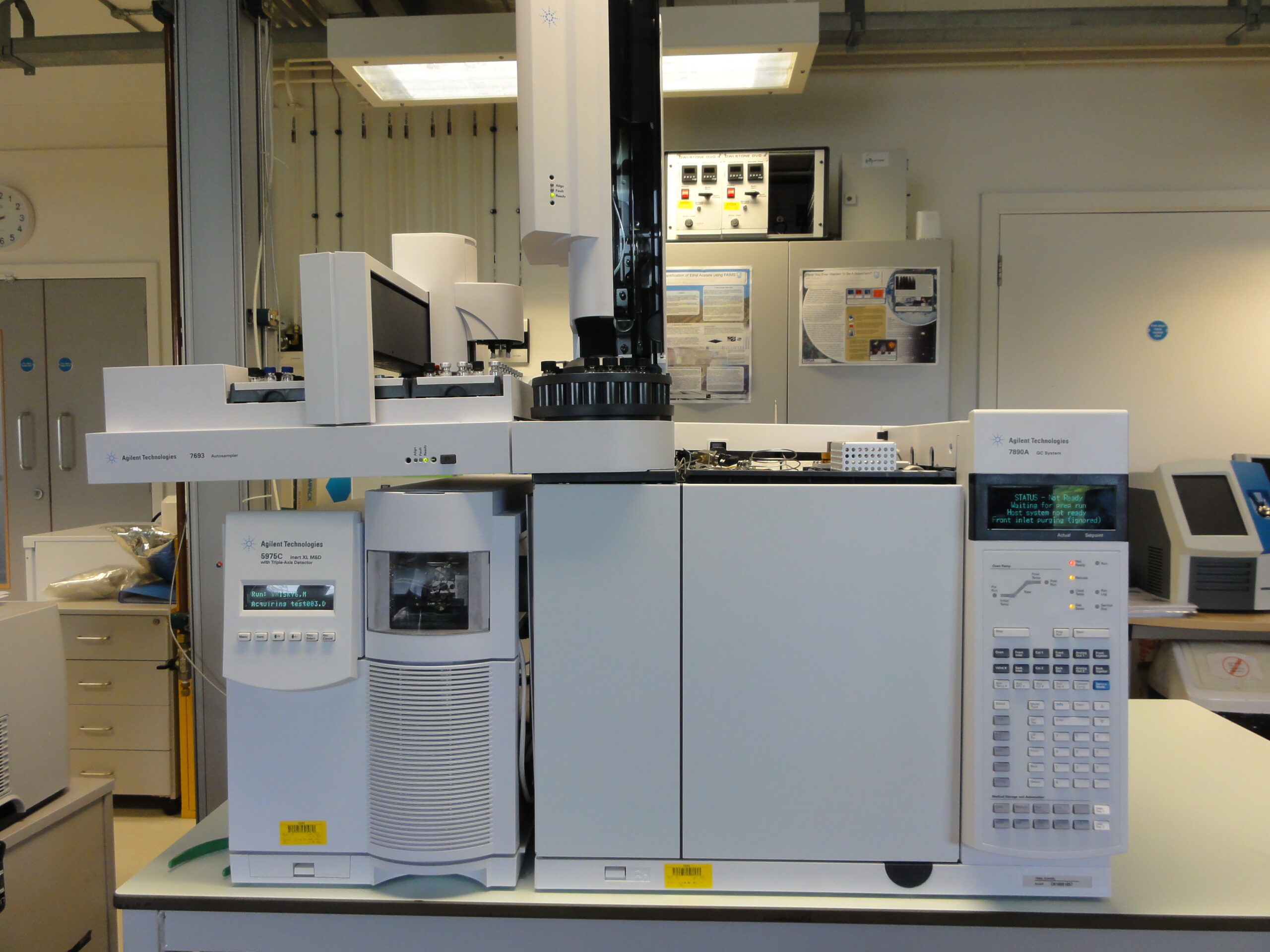
It focuses on Agilent Technologies GCs and MSDs, with practicals taking place on 7890-5975C or 6890-5973 instruments, but much of the material covered will be broadly applicable to other manufacturers’ hardware.
The course includes theoretical teaching along with a guided hands-on practical element in the laboratory to practice and re-enforce the theoretical learning. The course is 50% theory and 50% practical in a lab environment.
This course addresses GC & GC-MS site preparation, initial installation, system check-out and familiarisation with the hardware internals. It then goes on to provide instruction on troubleshooting common hardware problems followed by practical experience of these in a real chromatography laboratory.
What would I learn?
- You will learn about safety considerations.
- You will learn the techniques and requirements for installing a GC and GC-MS system.
- You will be familiarised with the modules that make up a typical GC or GC-MS system.
- You will have practical experience of installing a gas supply, setting up system communications and installing and removing system modules.
- You will will learn about troubleshooting strategies and philosophy alongside common troubleshooting problems.
- You will have practical experience of troubleshooting and repairing common faults.
- You will the learn the requirements for the operational qualification of a typical GC or GC-MS system.
- You will have practical experience of carrying out the operational qualification of a system.
Is this course for me?
This course is suitable for intermediate to advanced users, already comfortable with the theory, operation and basic maintenance of GC and GC-MS. As a pre-requisite it is advisable either to attend both the Absolute Basics of GC & GC-MS and the Hands-on GC & GC-MS course, or already have an equivalent level of practical experience. If you have or will have responsibility in your laboratory for moving instruments, re-configuring instruments, fixing instruments, performing maintenance and troubleshooting beyond the basics, then this course will be very beneficial!
What's next?
Feedback from previous attendees
“The strength of this GC-MS training lies in the close link between theory and practical application. Developing expertise and understanding the nature and types of compounds suitable for such analysis has significantly strengthened my analytical skills. Furthermore, the instructor took the time to explain concepts thoroughly and address all concern”, Master student, 2026
“I found this course very interesting and highly valuable. It gave us the opportunity to work with a new instrument and gain hands-on experience with advanced techniques. The training was particularly useful, as it expanded our analytical capabilities. This device will enable us to effectively analyse volatile compounds in plants, which will significantly enhance the quality and scope of our research.”, 2026
“My most favorite part was the quality of the classroom-based course. Dr Diane particularly helped us to see and understand the role of each important part of the GC-MS and GC-FTIR. Even more fascinating were the moments spent in front of the machine for the assembly on the first day and understanding how it worked on the last day.”, 2026
“The practical session where we were showed the different parts of the GC and how it functions, i particularly enjoyed the doing the calibrations on the equipment.”, 2026
“I appreciated our teacher’s explanations in this course because she used PowerPoint to explain the role of each part of the GC-MS and physically presented each part, allowing us to get a hands-on feel for the technology. What I found most useful was the fact that she set up the equipment with us, the learners.”, Lecturer in Clinical Science and Nutrition, 2026
